
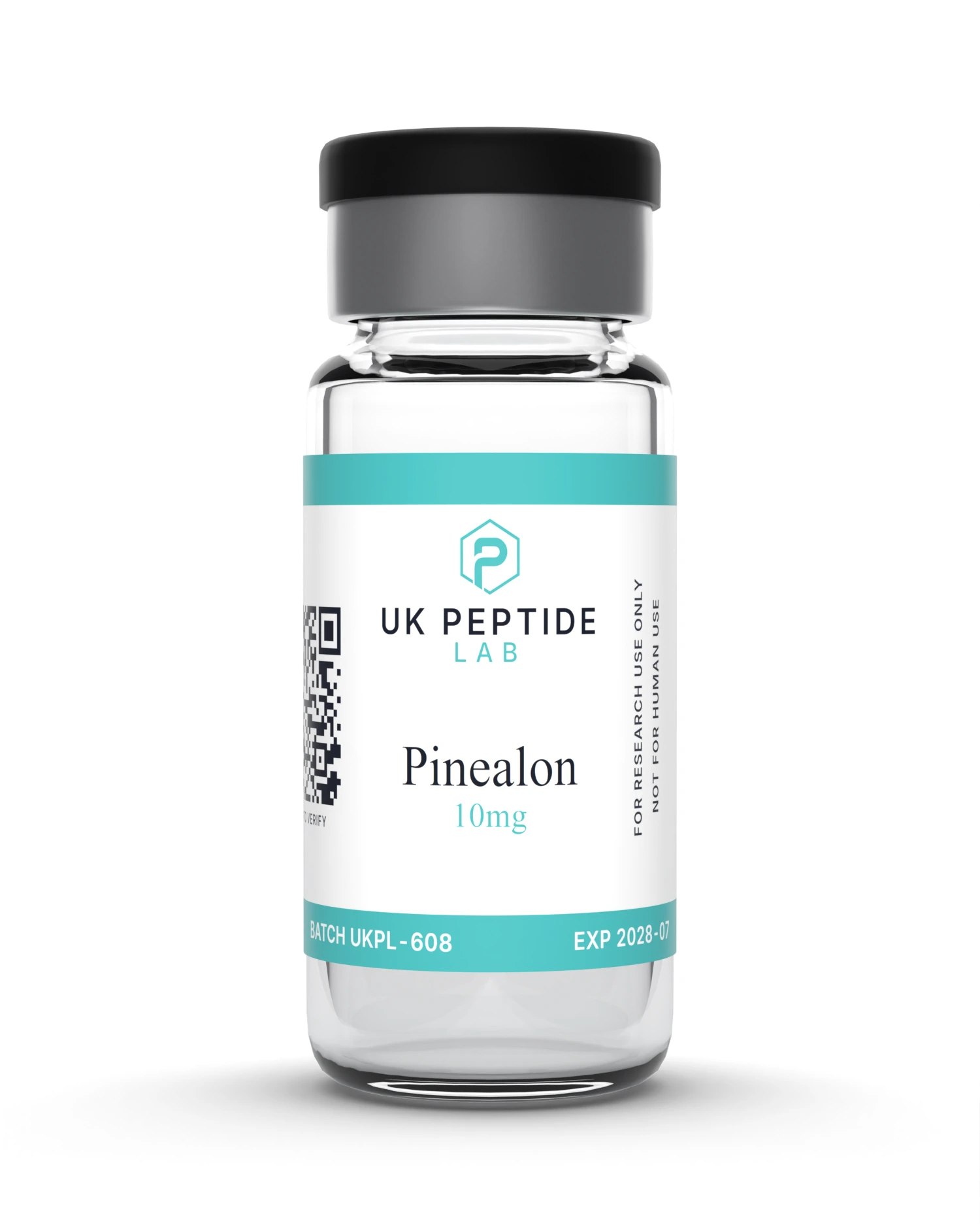
Pinealon
10mg
Pinealon is a synthetic tripeptide with the sequence Glu-Asp-Arg, often abbreviated EDR. It belongs to the short peptide bioregulator class described by Khavinson and colleagues, a body of work proposing that very short peptides can enter cells and interact directly with DNA and histone proteins to influence gene expression. Its small size, three residues and a molecular weight of 418.41 g/mol, is central to that proposed mechanism, since it is small enough to cross both the cell and nuclear membranes without a transporter. Published research is largely preclinical and originates predominantly from a single research group, much of it in Russian-language journals, and independent replication is limited. Researchers should weigh that evidence base accordingly. Supplied as lyophilised powder for research use only.
Published research on Pinealon is indexed on PubMed.
Intended Use: Strictly for in-vitro laboratory research. Not for use in humans or animals. Not to be used in foods, drugs, or medical diagnostics. This product has not been evaluated by the MHRA or FDA. Buyer assumes full responsibility for safe handling and regulatory compliance.
98.8%
Purity
LAB
Certified
SAME
Day Ship
Quantity
Add £15.01 more for free UK delivery
Damaged or lost? Free reshipment guaranteed
Bacteriostatic Water 10ml
Required to reconstitute lyophilised peptides.
Research Use Only
This product is intended strictly for research and laboratory use only. Not for human consumption, medical use, or diagnostic purposes.
Certificate of Analysis
Third-party tested
Lyophilised Stability
24 months
Sealed at -20°C, light-protected
Reconstituted Stability
Up to 3 months
Stored at 2-8°C after mixing
Cold-Chain Shipping
Always
Dry-cold pack, Royal Mail Tracked 24
Important Notice
All compounds are sold individually and do not include research supplies. Products are provided in lyophilised (powder) form and require proper reconstitution before use in research settings.
Related Products

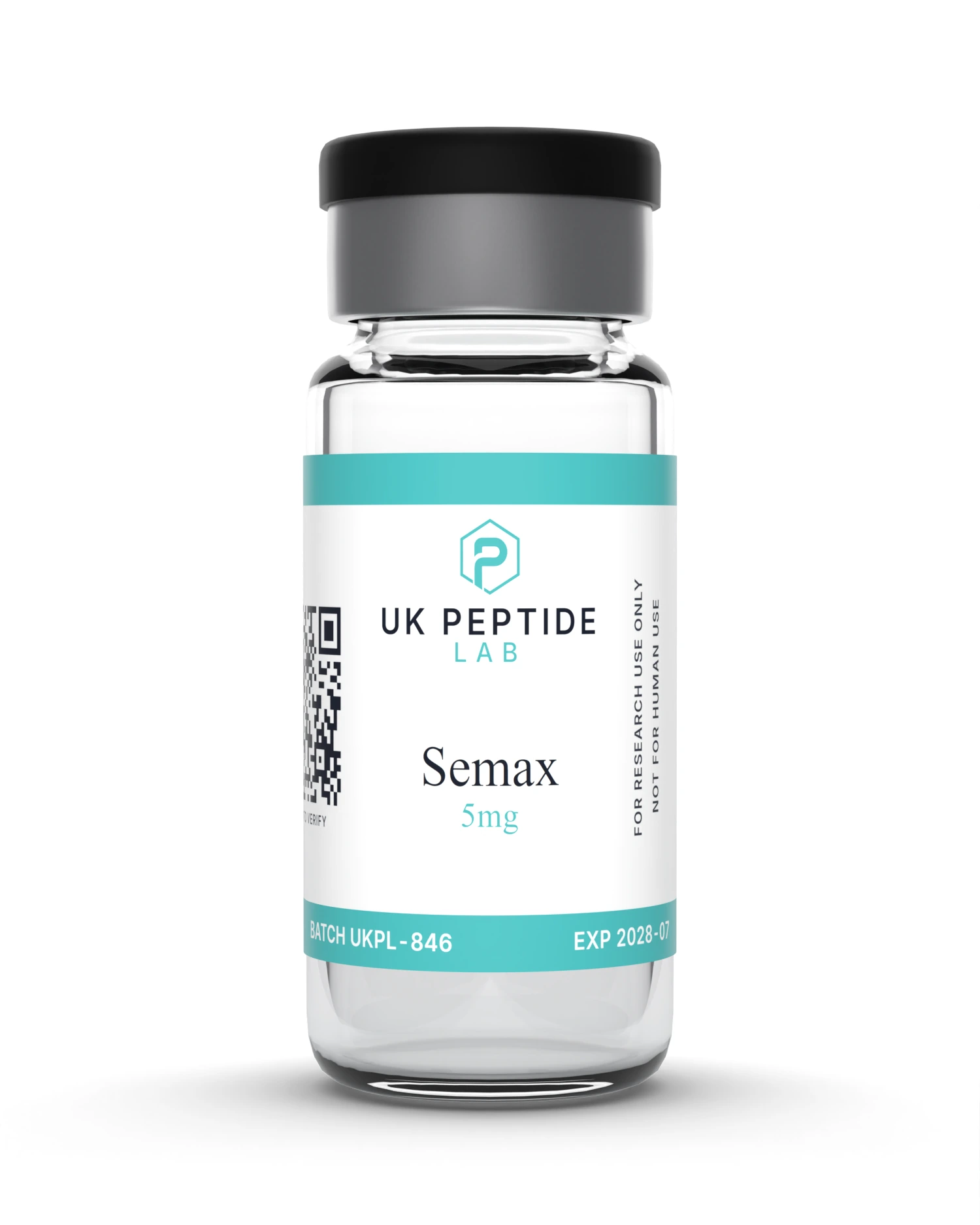
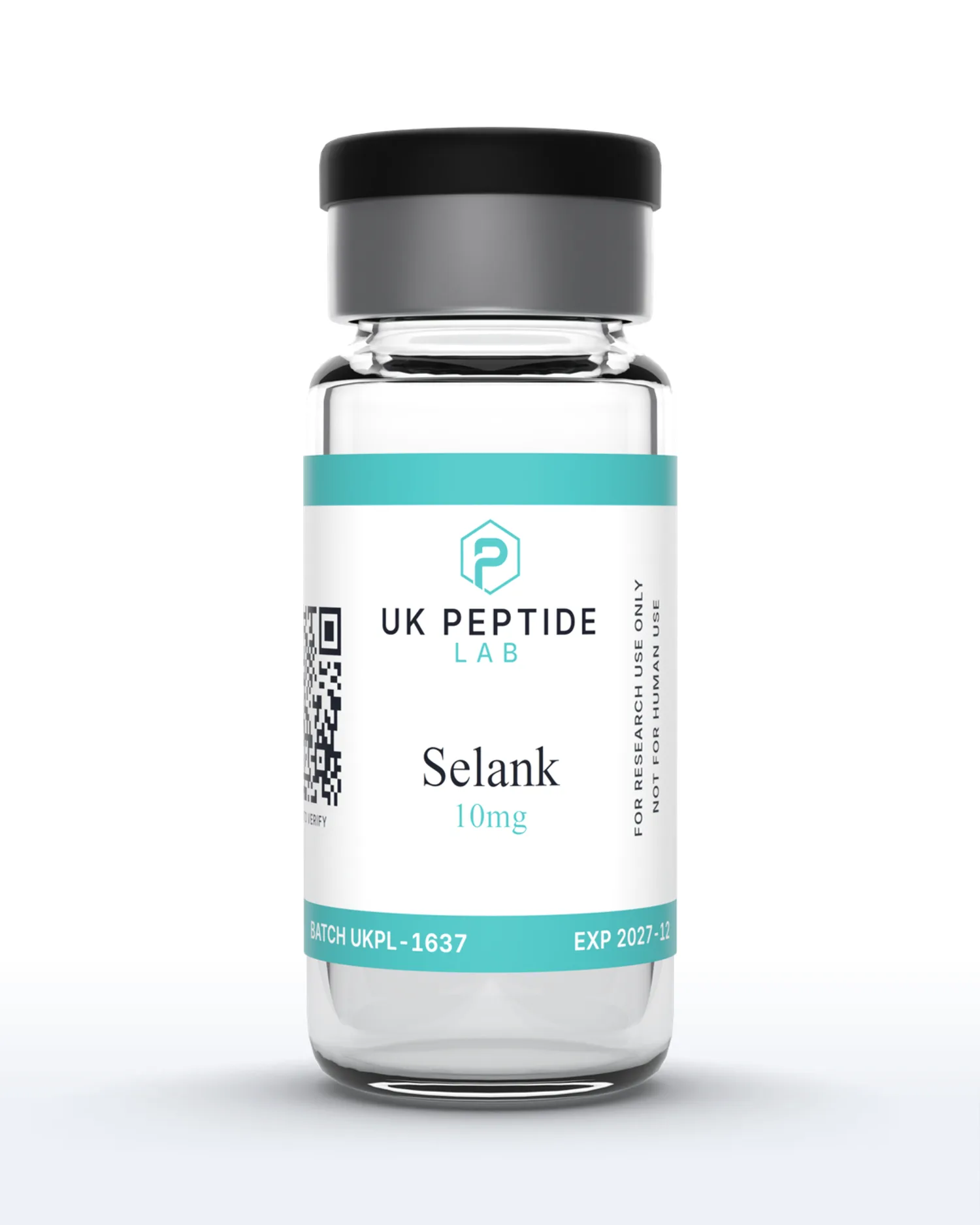
Pinealon Price (UK)
Pinealon 10mg is £29.99 per vial, supplied from stock in the UK with a third-party HPLC certificate published on this page. UK delivery is £4.50 by Royal Mail Tracked 24, or free once your basket reaches £45 (£15.01 away at this price). Orders placed before 2pm on a working day are dispatched the same day.
| Vial | Price | Cost per mg | Availability |
|---|---|---|---|
| Pinealon 10mgThis page | £29.99 | £3.00 | In stock |
Prices are in GBP and shown per vial as supplied, lyophilised, for in-vitro laboratory research only. Cost per mg is given so researchers can compare vial sizes on a like-for-like basis. Stock and pricing on this table are read live from our inventory, so they match the basket. See our FAQ for delivery and payment options, and quality & testing for how each batch is verified.
Product Specifications
Research Overview
Pinealon, also catalogued as the EDR peptide or simply by its sequence Glu-Asp-Arg, is a synthetic tripeptide of glutamyl-aspartyl-arginine with molecular formula C₁₅H₂₆N₆O₈, molecular weight 418.4 g/mol and CAS number 175175-23-2. It belongs to the family of short 'peptide bioregulators' developed by the Khavinson school at the St Petersburg Institute of Bioregulation and Gerontology, a research programme that has produced a series of di-, tri- and tetrapeptides proposed to regulate gene expression in the tissue class from which the original extracts were derived. Pinealon is the tripeptide associated with brain tissue in that programme. The published mechanistic proposal is epigenetic: a 2021 paper from Khavinson and colleagues (PubMed 33396470) sets out a possible mechanism by which the EDR tripeptide could regulate gene expression and protein synthesis in neuronal models, framed by the authors as a route to neuroprotection, with the proposed peptide-DNA and chromatin-level interactions presented as hypothesis rather than settled mechanism. More recently, a 2024 in-vitro study (PubMed 39518916) reported that EDR reduced markers of oxidative DNA damage in induced neurons derived from fibroblasts of elderly donors, a cell-culture model of neuronal ageing. The honest position on this literature needs stating plainly, because it is narrow even by research-peptide standards: it is small, it originates largely from a single research group, it consists mostly of in-vitro work and small animal studies, and there is no independent replication at scale and no human randomised controlled trial of Pinealon in the indexed literature. Claims made about the EDR peptide elsewhere on the internet run well ahead of anything published. What the compound genuinely offers a laboratory is a chemically simple, well-defined tripeptide probe, 418.4 g/mol and readily soluble in aqueous media, for testing the Khavinson bioregulator hypothesis on its own merits in neuronal culture and ageing models. Pinealon is not a licensed medicine in the United Kingdom or anywhere else. It is supplied as lyophilised powder strictly for in-vitro laboratory research use only and is not for human consumption.
Product Specifications
Laboratory Handling
- Store lyophilised vials at -20°C for long-term stability, protected from light and moisture. Reconstituted solution should be held at 2-8°C.
- Reconstitute with bacteriostatic water introduced slowly down the inner glass wall, never directly onto the lyophilised cake. Swirl gently until dissolved. A tripeptide of this size dissolves rapidly and holds no secondary structure, so the practical concern is not shear but hydrolysis in standing aqueous solution.
- Work under aseptic conditions with sterile syringes and alcohol-swabbed stoppers. Use a laminar flow hood where available.
- Prepare only the volume an experiment requires, aliquot reconstituted stock into single-use vessels, and avoid repeated freeze-thaw cycles. Label each aliquot with the reconstitution date.
Frequently Asked Questions
What is Pinealon?
Pinealon, also written EDR peptide or simply Glu-Asp-Arg, is a synthetic tripeptide of glutamyl-aspartyl-arginine, molecular formula C₁₅H₂₆N₆O₈, molecular weight 418.4 g/mol, CAS 175175-23-2. It is one of the short 'peptide bioregulators' developed by the Khavinson school at the St Petersburg Institute of Bioregulation and Gerontology, where it is the tripeptide associated with brain tissue. The published work proposes epigenetic mechanisms, regulation of gene expression and protein synthesis in neuronal models, framed as a possible route to neuroprotection (PubMed 33396470), and a 2024 in-vitro study reported reduced markers of oxidative DNA damage in induced neurons derived from elderly donor fibroblasts (PubMed 39518916). That literature is small, comes largely from a single research group, is preclinical throughout, and contains no human randomised controlled trial of Pinealon, a position stated here plainly. Supplied as lyophilised powder for in-vitro research use only, not a licensed medicine.
Pinealon vs Semax
Both are Russian-origin research neuropeptides, which is where the resemblance ends, and comparing them is a useful exercise in reading evidence bases rather than marketing categories. Semax is a heptapeptide analogue of the ACTH(4-10) region, built as the ACTH(4-7) fragment plus Pro-Gly-Pro, with a comparatively substantial preclinical literature spanning neurotrophin signalling, including BDNF and trkB work in rat brain, produced across more than one laboratory. Pinealon is a Khavinson-school bioregulator tripeptide, Glu-Asp-Arg, whose literature is far smaller, largely single-group, and framed around a proposed epigenetic mechanism, direct regulation of gene expression, rather than a characterised receptor pathway. Neither compound has adequate human trial evidence, but the shape of the uncertainty differs: for Semax the open question is mostly translation from animal findings, whereas for Pinealon the mechanism itself remains a hypothesis awaiting independent replication. A laboratory choosing between them is really choosing which question to work on, established-pathway pharmacology versus testing the bioregulator hypothesis on its merits.
Pinealon Research Applications
Pinealon is used in in-vitro neuroscience and ageing research built around the Khavinson bioregulator hypothesis. Reported and plausible applications include neuronal cell culture models of oxidative stress and age-related change, following the 2024 study in which the EDR tripeptide reduced markers of oxidative DNA damage in induced neurons derived from elderly donor fibroblasts (PubMed 39518916), gene-expression and protein-synthesis endpoint assays in neuronal models exploring the proposed epigenetic mechanism (PubMed 33396470), and comparative work benchmarking short bioregulator peptides against characterised neuroprotective compounds. Researchers should be explicit about the shape of this evidence base: it is small, mostly in-vitro with some small animal studies, produced largely by one research school, and without independent replication at scale or any human clinical trial. That makes independent replication itself one of the most scientifically useful things a laboratory can do with the compound.
Reconstitution Guide
Allow vials to reach room temperature, then sterilise the rubber stopper of both the peptide vial and the bacteriostatic water vial with an alcohol swab. Slowly draw your bacteriostatic water into a sterile insulin syringe, then inject it gently down the inner glass wall of the peptide vial, never directly onto the lyophilised powder. Once added, gently swirl the vial in a slow circular motion until fully dissolved. Never shake or vortex. Pinealon is a highly water-soluble tripeptide and dissolves almost immediately; the solution should be clear and colourless. Because a three-residue peptide holds no secondary structure, the practical concern is not shear but hydrolysis in standing aqueous solution, so prepare only what the experiment requires and refrigerate promptly. Label the vial with the reconstitution date and store immediately.
See our full peptide reconstitution guide and reconstitution calculator for step-by-step protocol.
Storage Instructions
Lyophilised vials should be stored at -20°C, protected from light and moisture, and remain stable for up to 24 months. Once reconstituted with bacteriostatic water, store the solution at 2-8°C (standard refrigerator) and use within approximately 4 weeks. For storage beyond that, prepare single-use aliquots at -20°C and avoid repeated freeze-thaw cycles, which degrade recovery of intact peptide. Handle under sterile laboratory conditions throughout.
Frequently Asked Questions
Research References
Related Research Compounds
Pinealon
10mg · £29.99