
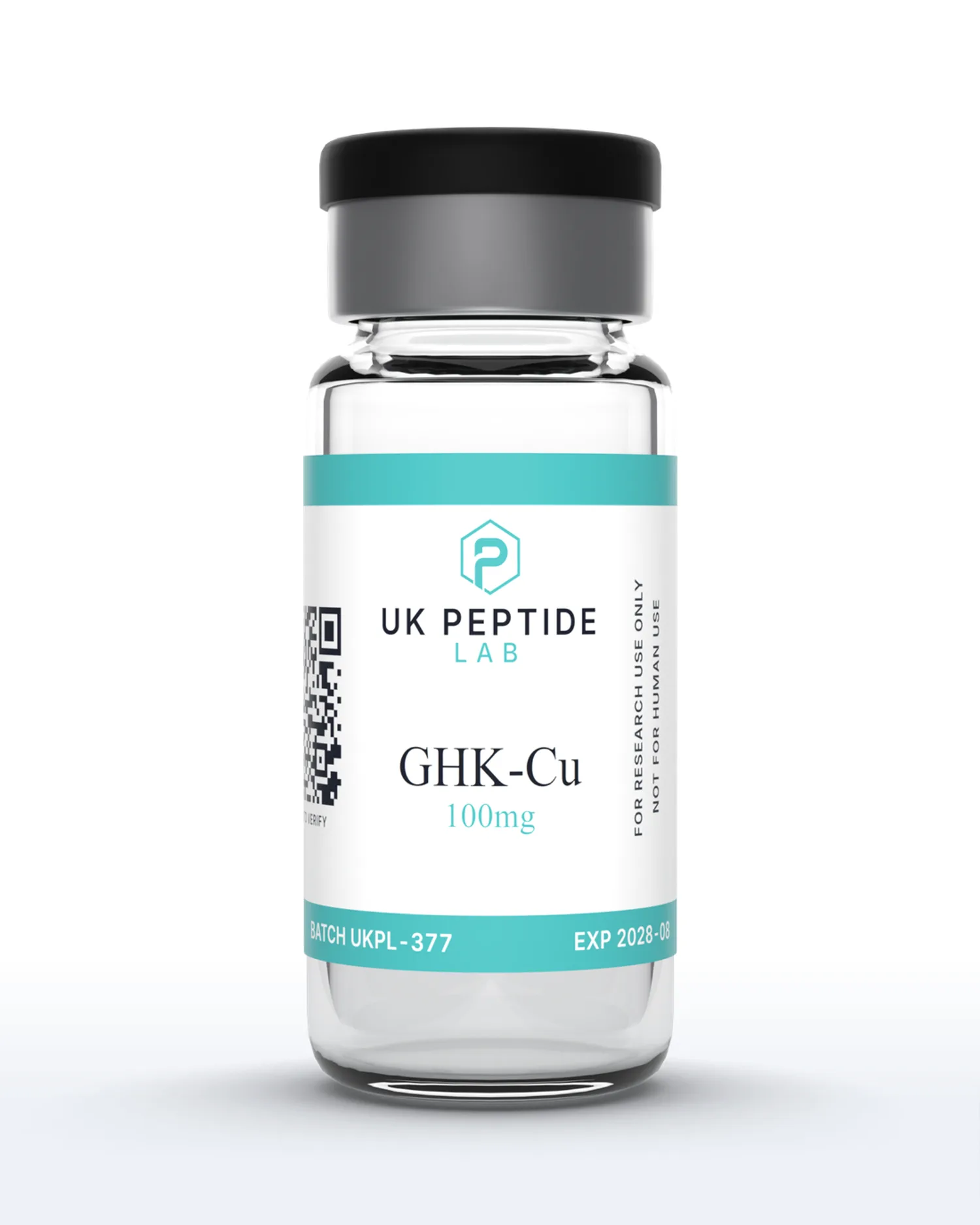
GHK-Cu
100mg
GHK-Cu is a naturally occurring copper complex of the tripeptide glycyl-L-histidyl-L-lysine, found in human plasma, saliva and urine. Research has examined its roles in wound healing, tissue remodelling, anti-inflammatory responses and antioxidant activity. Studies show GHK-Cu influences gene expression related to collagen synthesis and extracellular matrix remodelling. One of the most popular compounds in tissue biology and skin research. Supplied as lyophilised powder, third-party tested, lab certificate published on this page.
Published research on GHK-Cu is indexed on PubMed. See our full UK buyer's guide for Research Peptides.
Intended Use: Strictly for in-vitro laboratory research. Not for use in humans or animals. Not to be used in foods, drugs, or medical diagnostics. This product has not been evaluated by the MHRA or FDA. Buyer assumes full responsibility for safe handling and regulatory compliance.
>99%
Purity
LAB
Certified
SAME
Day Ship
Quantity
Add £15.01 more for free UK delivery
Damaged or lost? Free reshipment guaranteed
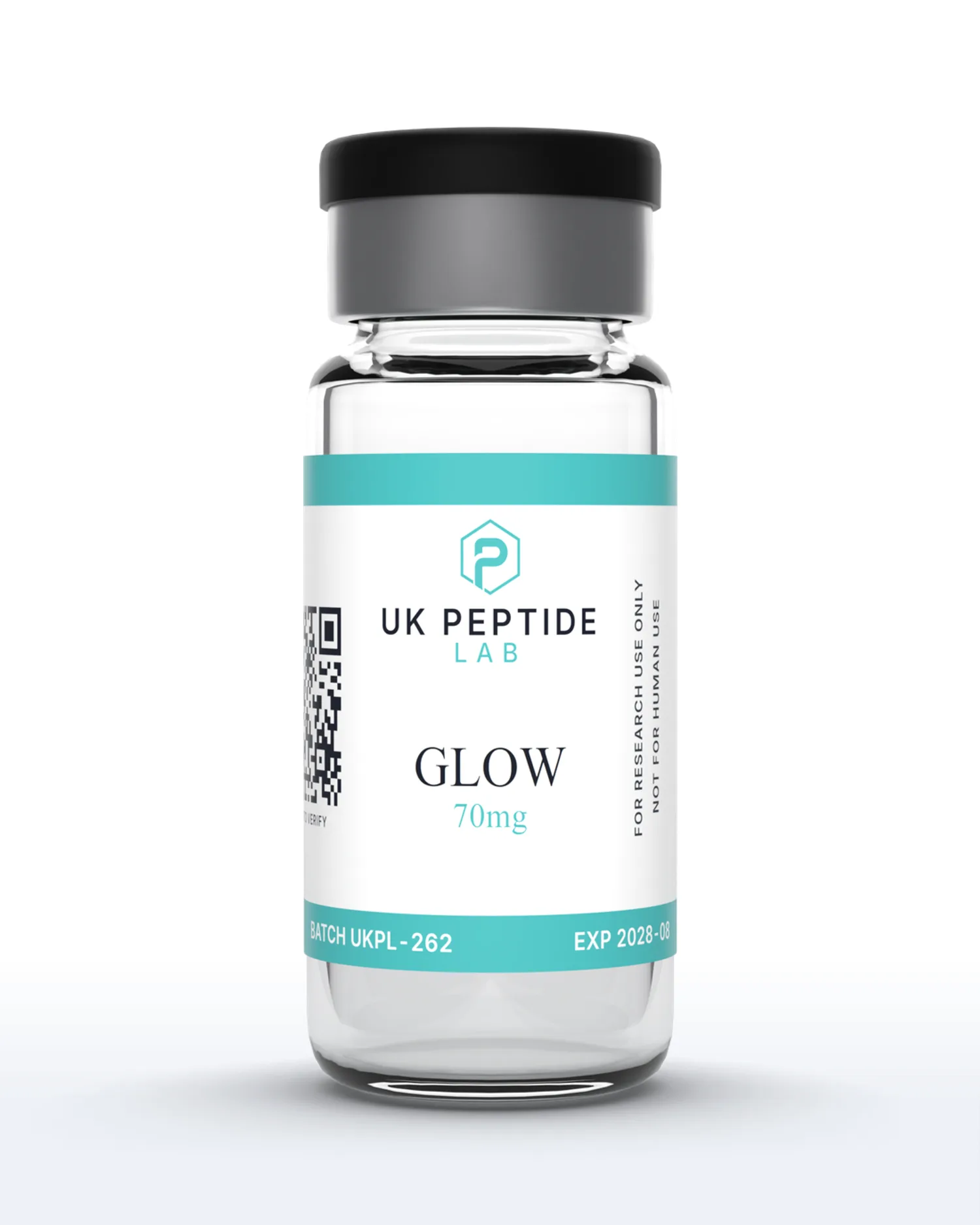
GLOW 70mg
Pre-blended regenerative research vial. BPC-157 10mg + TB-500 10mg + GHK-Cu 50mg.
All components in a single lyophilised vial. One reconstitution, one inventory line, one CoA.
Research Use Only
This product is intended strictly for research and laboratory use only. Not for human consumption, medical use, or diagnostic purposes.
Certificate of Analysis
Third-party tested
Lyophilised Stability
24 months
Sealed at -20°C, light-protected
Reconstituted Stability
Up to 3 months
Stored at 2-8°C after mixing
Cold-Chain Shipping
Always
Dry-cold pack, Royal Mail Tracked 24
Important Notice
All compounds are sold individually and do not include research supplies. Products are provided in lyophilised (powder) form and require proper reconstitution before use in research settings.
Related Products
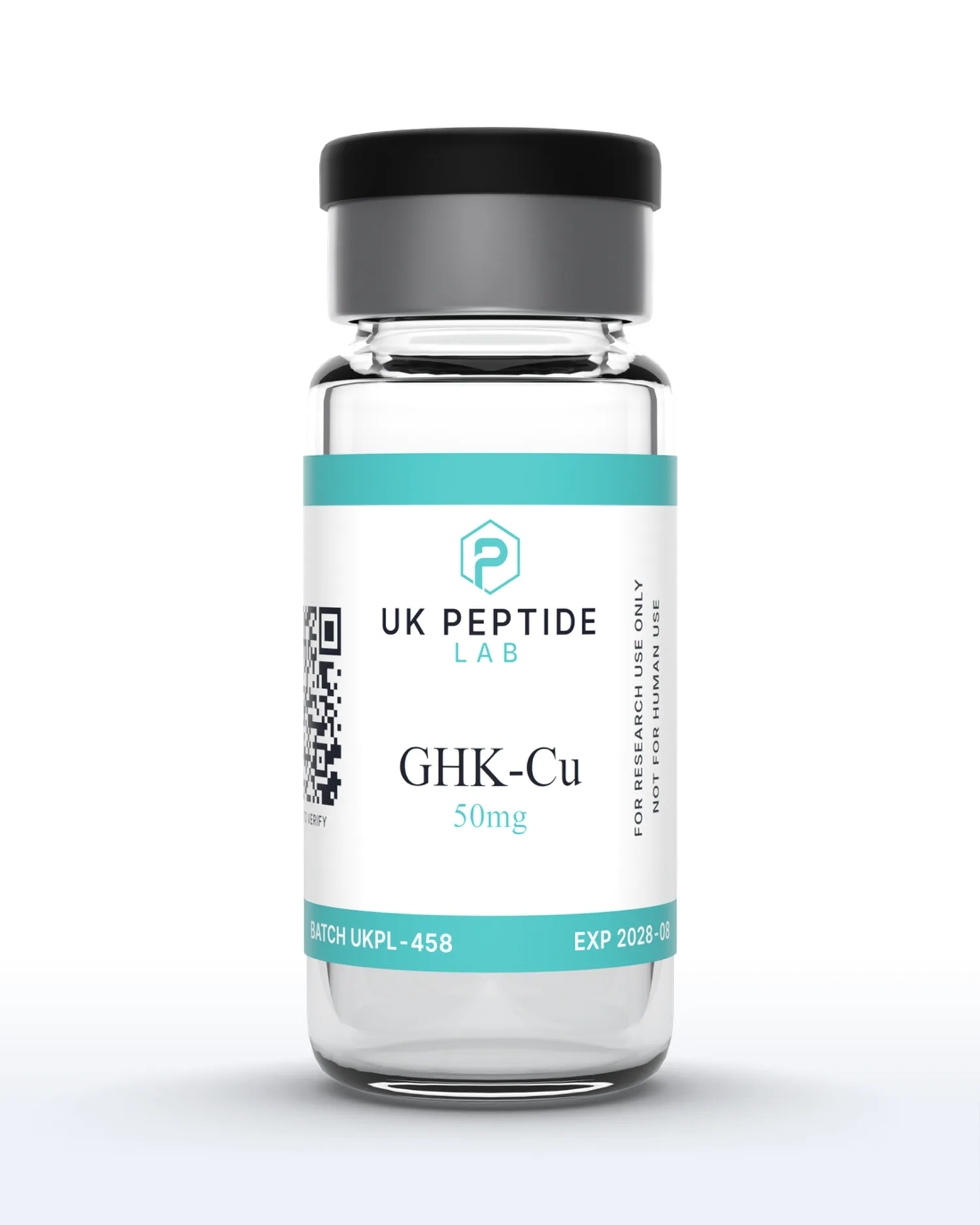
GHK-Cu Price (UK)
GHK-Cu is supplied in 2 vial sizes, priced from £19.99 for 50mg to £29.99 for 100mg. Every size ships from our UK facility with the same third-party HPLC certificate published on this page. UK delivery is £4.50 by Royal Mail Tracked 24, or free once your basket reaches £45 (£15.01 away at this price). Orders placed before 2pm on a working day are dispatched the same day.
| Vial | Price | Cost per mg | Availability |
|---|---|---|---|
| GHK-Cu 100mgThis page | £29.99 | £0.30Best value | In stock |
| GHK-Cu 50mg | £19.99 | £0.40 | In stock |
Prices are in GBP and shown per vial as supplied, lyophilised, for in-vitro laboratory research only. Cost per mg is given so researchers can compare vial sizes on a like-for-like basis. Stock and pricing on this table are read live from our inventory, so they match the basket. See our FAQ for delivery and payment options, and quality & testing for how each batch is verified.
Research Overview
GHK-Cu is the copper(II) complex of the tripeptide glycyl-L-histidyl-L-lysine, a naturally occurring human sequence first isolated from plasma by Loren Pickart in 1973 and subsequently identified in saliva and urine. The free tripeptide chelates a single Cu(II) ion through its N-terminal amine, the deprotonated glycyl amide nitrogen and the histidine imidazole, giving the square-planar complex responsible for the deep blue colour of a reconstituted ghkcu solution. Pickart and colleagues reported in Nature (1980) that the tripeptide facilitates copper uptake into cultured cells, and potentiometric titration places the GHK-Cu stability constant at log K of approximately 16.4, marginally above the copper transport site of human serum albumin at roughly 16.2. That near-parity underpins the prevailing model of this copper peptide as a physiological copper shuttle rather than an inert chelator, and a ternary GHK-Cu-albumin complex has since been characterised directly. Research interest in the ghk cu peptide rests on two largely separate literatures. The first is extracellular matrix biology: fibroblast culture and rat wound-chamber work from the Maquart and Simeon groups reported that GHK-Cu stimulates collagen, glycosaminoglycan and small proteoglycan synthesis while simultaneously upregulating matrix metalloproteinase-2 and its tissue inhibitors, a combined synthesis-and-turnover signature unusual among matrix-active compounds. The GHK motif itself occurs within the alpha-2(I) chain of type I collagen, so it is commonly classified as a matrikine, a fragment liberated during matrix degradation that signals back to the cells that deposited it. The second literature is transcriptomic. Connectivity Map analyses reported by Pickart and by Campbell indicate that GHK modulates expression of the order of 4,000 human genes, and Campbell et al. (Genome Medicine, 2012) identified GHK by Connectivity Map screening as a compound inversely correlated with an emphysema-related lung destruction signature, then examined its effects on collagen remodelling in cultured lung fibroblasts. Circulating GHK is reported to decline from around 200 ng/mL at age 20 to approximately 80 ng/mL at age 60. Supplied as lyophilised powder for in-vitro research use only.
Product Specifications
Laboratory Handling
- Store lyophilised vials at -20°C in a light-protected environment. Reconstituted solution should be held at 2-8°C and used within 4 weeks.
- Protect from light throughout handling. Copper(II) peptide complexes are photolabile and prolonged UV or fluorescent exposure can drive ligand oxidation.
- Reconstitute with bacteriostatic water or sterile water for injection, directing the stream down the inner glass wall. Swirl gently until the blue colour is uniform. Do not vortex.
- Use glass or high-grade polypropylene labware and avoid prolonged contact with stainless steel or other chelating surfaces, which can strip Cu(II) from the tripeptide. Note that strong chelators, phosphate-rich buffers and reducing agents in an experimental medium will compete for the copper centre and alter the species actually present.
Frequently Asked Questions
What is GHK-Cu?
GHK-Cu is the copper(II) complex of the tripeptide glycyl-L-histidyl-L-lysine (C₁₄H₂₄CuN₆O₄, 403.9 g/mol, CAS 89030-95-5). The free tripeptide GHK occurs naturally in human plasma, saliva and urine, and was first isolated from plasma by Loren Pickart in 1973. Cu(II) is held in a square-planar coordination sphere by the N-terminal amine, the deprotonated glycyl amide nitrogen and the histidine imidazole, at a stability constant (log K approximately 16.4) close to that of the copper transport site on human serum albumin. This near-parity is the basis for the model of ghkcu as a physiological copper shuttle rather than an inert chelator. Supplied as lyophilised powder for in-vitro research use only.
GHK-Cu vs Copper-Free GHK
GHK and GHK-Cu are two distinct species, not two names for one compound. GHK is the free tripeptide (C₁₄H₂₄N₆O₄, 340.4 g/mol, CAS 49557-75-7); GHK-Cu carries one bound Cu(II) ion and is 63.5 g/mol heavier. The distinction is experimentally load-bearing. Molar calculations differ, the copper complex is blue while the free peptide is colourless, and the equilibrium between them shifts with the free copper, competing chelators, phosphate content and reducing agents present in the medium. Published work exists on both forms independently, including studies on copper-free GHK, so a protocol should state which species is intended and control the copper content of the medium accordingly. Researchers comparing GHK-Cu against other copper-binding sequences such as AHK-Cu should note that the loose trade term copper peptide covers several chemically different ligands.
GHK-Cu Research Applications
GHK-Cu appears in two largely separate research literatures. The first is extracellular matrix biology, where fibroblast culture and rat wound-chamber studies from the Maquart and Simeon groups (1988-2000) reported stimulation of collagen synthesis, sulfated glycosaminoglycan synthesis and small proteoglycan expression, alongside upregulation of matrix metalloproteinase-2 and its tissue inhibitors, a simultaneous increase in both matrix deposition and matrix turnover. Related in-vitro work reported increased integrin expression and p63 positivity in keratinocyte culture. The GHK motif occurs within the alpha-2(I) chain of type I collagen, so it is generally classified as a matrikine. The second literature is transcriptomic: Connectivity Map analyses reported by Pickart and colleagues indicate GHK alters expression of on the order of 4,000 human genes, and Campbell et al. (Genome Medicine, 2012) used that dataset to identify GHK as inversely correlated with an emphysema-related lung destruction signature, then examined collagen remodelling in cultured lung fibroblasts. More recent preclinical work has examined GHK-Cu in rodent models of pulmonary fibrosis, silicosis and airway remodelling, with oxidative stress and inflammatory signalling as the reported endpoints. Copper delivery to copper-dependent enzymes including lysyl oxidase and superoxide dismutase is the mechanism most commonly proposed to link these observations.
Reconstitution Guide
Allow vials to reach room temperature, then sterilise the rubber stopper of both the peptide vial and the bacteriostatic water vial with an alcohol swab. Slowly draw your bacteriostatic water into a sterile insulin syringe, then inject it gently down the inner glass wall of the peptide vial, never directly onto the lyophilised powder. Once added, gently swirl the vial in a slow circular motion until fully dissolved. Never shake or vortex. The solution should be clear and colourless. Label the vial with the reconstitution date and store immediately. GHK-Cu solution will be blue to blue-violet once reconstituted, from the d-d transition of the Cu(II) centre. This is expected. A colourless or green-tinged solution indicates the complex has been disrupted rather than simply diluted, and visible absorption spectrophotometry around 500-600 nm is the standard bench check on complex integrity. Reconstitute away from direct light and use glass or high-grade polypropylene labware, avoiding prolonged contact with chelating or metallic surfaces that can strip Cu(II) from the tripeptide.
See our full peptide reconstitution guide and reconstitution calculator for step-by-step protocol.
Storage Instructions
Lyophilised vials should be stored at -20°C, protected from light and moisture, and remain stable for up to 24 months. Once reconstituted with bacteriostatic water, store the solution at 2-8°C (standard refrigerator) and use within approximately 3 months. For storage beyond that, prepare single-use aliquots at -20°C, where reconstituted peptide remains stable for up to 6 months. Avoid repeated freeze-thaw cycles and always handle under sterile laboratory conditions. GHK-Cu is photolabile as a copper(II) peptide complex, so keep both lyophilised vials and reconstituted solution protected from UV and fluorescent light, using amber or foil-wrapped vessels for aliquots. Freeze-thaw cycling can disrupt the copper coordination sphere in addition to degrading the peptide backbone, so single-use aliquots are preferable to repeated access of a single stock.
Frequently Asked Questions
Research References
- Growth-modulating plasma tripeptide may function by facilitating copper uptake into cells (Nature, 1980)
- GHK-Cu stimulates matrix metalloproteinase-2 expression by fibroblast cultures (Life Sci, 2000)
- A gene expression signature of emphysema-related lung destruction and its reversal by the tripeptide GHK (Genome Med, 2012)
- GHK Peptide as a Natural Modulator of Multiple Cellular Pathways in Skin Regeneration (Biomed Res Int, 2015)
Related Research Compounds
GHK-Cu
100mg · £29.99