
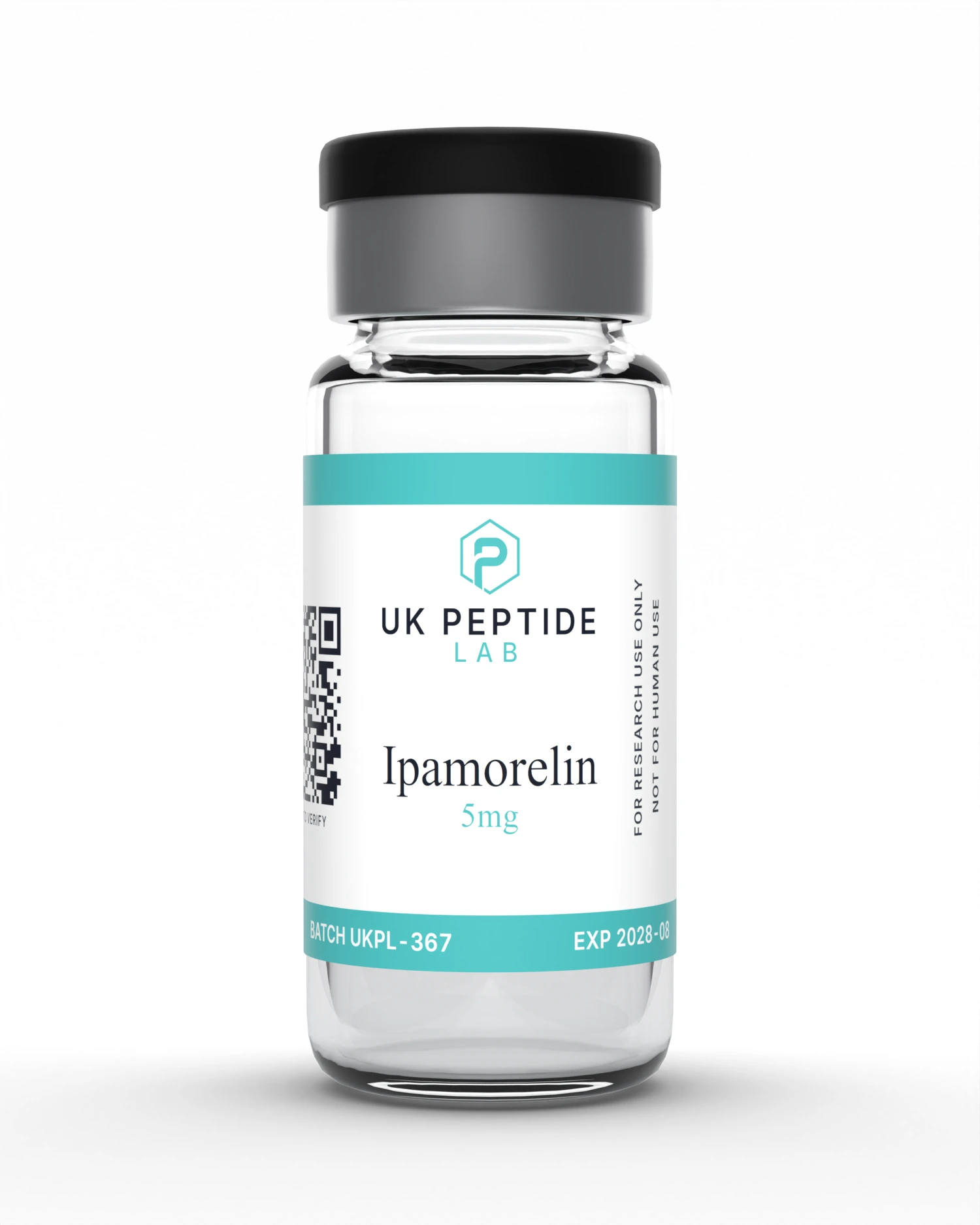
Ipamorelin
5mg
Ipamorelin is a selective growth hormone secretagogue and ghrelin receptor agonist pentapeptide. Research has shown it stimulates growth hormone release without significantly affecting cortisol or prolactin, making it one of the most selective GH secretagogues available. Often paired with CJC-1295 in synergistic research. One of the most studied compounds in endocrinology. Supplied as lyophilised powder, third-party tested, lab certificate published on this page.
Published research on Ipamorelin is indexed on PubMed. See our full UK buyer's guide for Research Peptides.
Intended Use: Strictly for in-vitro laboratory research. Not for use in humans or animals. Not to be used in foods, drugs, or medical diagnostics. This product has not been evaluated by the MHRA or FDA. Buyer assumes full responsibility for safe handling and regulatory compliance.
98.958%
Purity
LAB
Certified
SAME
Day Ship
Quantity
Add £23.01 more for free UK delivery
Damaged or lost? Free reshipment guaranteed
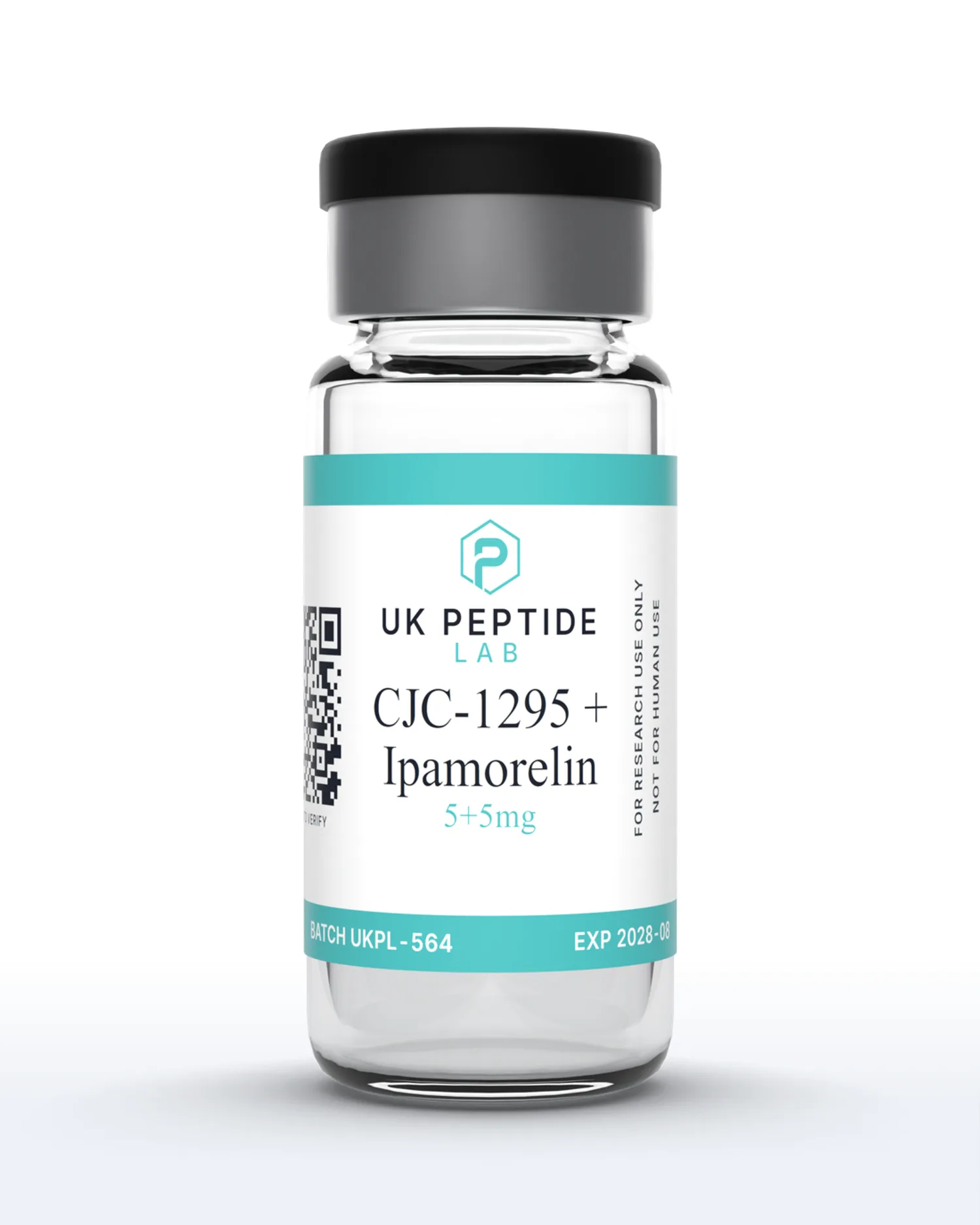
CJC-1295 + Ipamorelin 5+5mg
Pre-blended GHRH + GHRP research peptide vial. CJC-1295 (no DAC) and Ipamorelin combined.
All components in a single lyophilised vial. One reconstitution, one inventory line, one CoA.
Research Use Only
This product is intended strictly for research and laboratory use only. Not for human consumption, medical use, or diagnostic purposes.
Certificate of Analysis
Third-party tested
Lyophilised Stability
24 months
Sealed at -20°C, light-protected
Reconstituted Stability
Up to 3 months
Stored at 2-8°C after mixing
Cold-Chain Shipping
Always
Dry-cold pack, Royal Mail Tracked 24
Important Notice
All compounds are sold individually and do not include research supplies. Products are provided in lyophilised (powder) form and require proper reconstitution before use in research settings.
Related Products
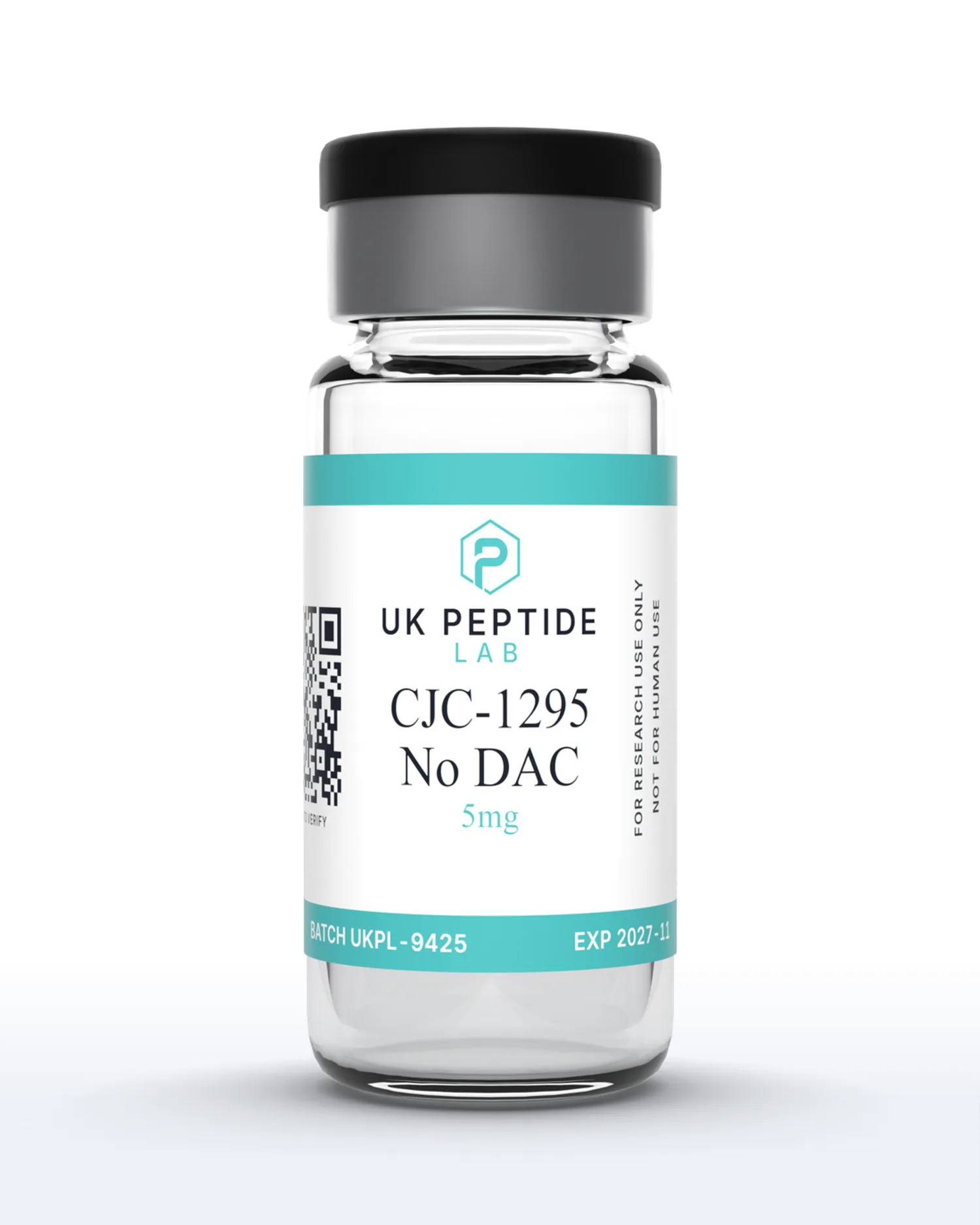
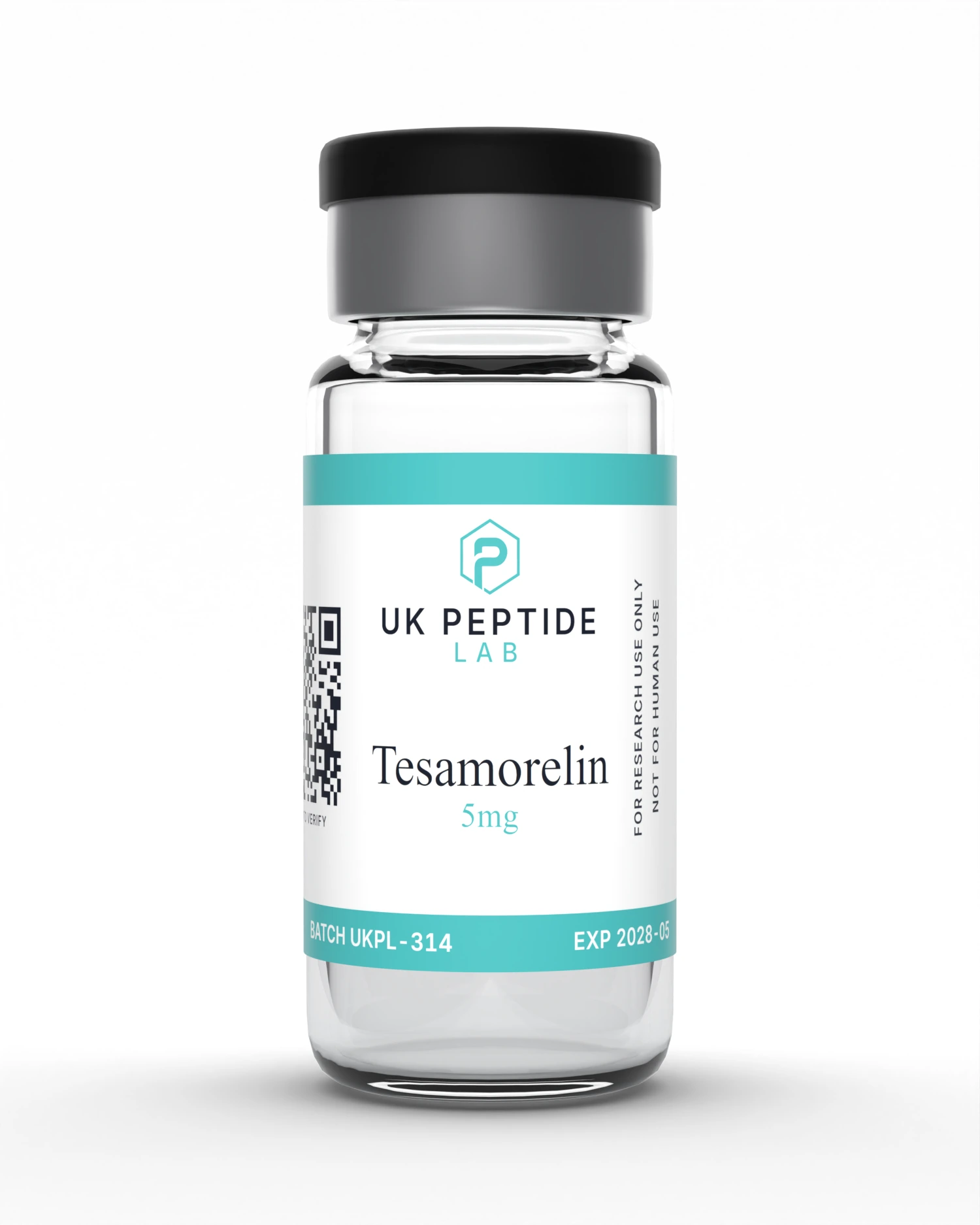
Ipamorelin Price (UK)
Ipamorelin 5mg is £21.99 per vial, supplied from stock in the UK with a third-party HPLC certificate published on this page. UK delivery is £4.50 by Royal Mail Tracked 24, or free once your basket reaches £45 (£23.01 away at this price). Orders placed before 2pm on a working day are dispatched the same day.
| Vial | Price | Cost per mg | Availability |
|---|---|---|---|
| Ipamorelin 5mgThis page | £21.99 | £4.40 | In stock |
Prices are in GBP and shown per vial as supplied, lyophilised, for in-vitro laboratory research only. Cost per mg is given so researchers can compare vial sizes on a like-for-like basis. Stock and pricing on this table are read live from our inventory, so they match the basket. See our FAQ for delivery and payment options, and quality & testing for how each batch is verified.
Product Specifications
Research Overview
Ipamorelin is a synthetic pentapeptide and highly selective growth hormone secretagogue (GHS). It acts by mimicking the endogenous hormone ghrelin and binding to the growth hormone secretagogue receptor type 1a (GHS-R1a) in the anterior pituitary gland. Ipamorelin is distinguished from other growth hormone releasing peptides (GHRPs) such as GHRP-2 and GHRP-6 by its exceptional selectivity, it stimulates growth hormone release without significantly elevating cortisol, prolactin, or adrenocorticotropic hormone (ACTH) levels. This selectivity makes Ipamorelin the most specific GHS available for endocrine research, minimising confounding hormonal variables in experimental designs. In current research practice, Ipamorelin is frequently studied in combination with CJC-1295 (modified GRF 1-29) for synergistic growth hormone secretion, Ipamorelin acting at the GHS receptor and CJC-1295 acting at the GHRH receptor to produce amplified pulsatile GH release through complementary receptor pathways.
The primary reference is Raun and colleagues (Eur J Endocrinol, 1998), the paper that introduced the molecule and established the property it is known for. They described it as the first growth hormone releasing peptide with a selectivity approaching that of GHRH itself, reporting growth hormone release without the accompanying ACTH and cortisol elevation characteristic of GHRP-6 and hexarelin. Structurally it is a pentapeptide with a C-terminal amide and two D-amino acids, both features contributing to protease resistance.
It was developed as a research compound under the code NNC 26-0161 and taken into a discontinued clinical study, so despite reaching human trials Ipamorelin holds no marketing authorisation in any jurisdiction. It is supplied here as a lyophilised research chemical for in-vitro laboratory use only.
Product Specifications
Laboratory Handling
- Store lyophilised vials at -20°C. Reconstituted Ipamorelin should be refrigerated at 2-8°C and used within 4 weeks.
- Reconstitute with bacteriostatic water. Direct the stream of water down the side of the vial and swirl gently.
- Handle under aseptic conditions using sterile syringes. Wipe vial stopper with an alcohol swab before each use.
- Avoid repeated freeze-thaw cycles. Prepare single-use aliquots where possible to maintain peptide integrity.
Frequently Asked Questions
What is Ipamorelin?
Ipamorelin is a synthetic pentapeptide growth hormone secretagogue with the sequence Aib-His-D-2-Nal-D-Phe-Lys-NH₂, molecular formula C₃₈H₄₉N₉O₅, molecular weight 711.85 g/mol, CAS 170851-70-4. Developed at Novo Nordisk and reported by Raun and colleagues in the European Journal of Endocrinology in 1998, it acts as an agonist at the growth hormone secretagogue receptor type 1a (GHS-R1a), the receptor later identified as the ghrelin receptor. Its defining property is selectivity: in the original characterisation it stimulated growth hormone release with a potency and efficacy comparable to GHRP-6, but unlike GHRP-2 and GHRP-6 it produced no significant release of ACTH or cortisol even at doses more than 200-fold above its GH-releasing ED₅₀, which is why the 1998 paper titled it the first selective growth hormone secretagogue. Clinical development, including a programme in postoperative ileus, was discontinued, and it is not an approved medicine in any jurisdiction. Supplied as lyophilised powder for in-vitro research use only.
Ipamorelin vs GHRP-2 and GHRP-6
All three are short synthetic peptides acting at GHS-R1a, and the differences that matter experimentally are off-target hormone release and receptor pharmacology rather than the GH endpoint itself. GHRP-6 (His-D-Trp-Ala-Trp-D-Phe-Lys-NH₂) was the first hexapeptide of the class and stimulates GH robustly, but also raises ACTH, cortisol and prolactin, and produces marked hunger signalling consistent with its activity at the ghrelin receptor. GHRP-2 is more potent on GH release than GHRP-6 in comparative studies but shares the same off-target profile, with measurable ACTH, cortisol and prolactin responses. Ipamorelin is the outlier: in the Raun 1998 characterisation it matched GHRP-6 for GH release in vitro and in vivo while showing no significant ACTH or cortisol response in swine even at very high multiples of the effective dose, and no meaningful prolactin release. For research designs where the question is GH-axis biology uncontaminated by simultaneous HPA-axis activation, that selectivity is the entire reason to choose ipamorelin over the older GHRPs; where the interplay of GH and ACTH release is itself the endpoint, GHRP-2 or GHRP-6 are the appropriate tools.
Ipamorelin Research Applications
Ipamorelin is used in endocrine research on GHS-R1a receptor pharmacology, where it serves as the standard selective agonist control against which newer secretagogues and the endogenous ligand ghrelin are compared. Reported applications include pituitary somatotroph signalling studies, pulsatile GH release kinetics in rodent and swine models, receptor binding and functional cAMP or calcium-mobilisation assays in GHS-R1a-transfected cell lines, and the dissection of GH-axis effects from HPA-axis effects that less selective GHRPs cannot cleanly separate. It also appears in bone metabolism work, where rat studies reported increased bone mineral content during ipamorelin administration, and in gastrointestinal motility research stemming from the discontinued postoperative ileus programme. It is frequently paired with GHRH-receptor agonists such as CJC-1295 or sermorelin to study the two-receptor convergence on somatotroph GH release.
Reconstitution Guide
Allow vials to reach room temperature, then sterilise the rubber stopper of both the peptide vial and the bacteriostatic water vial with an alcohol swab. Slowly draw your bacteriostatic water into a sterile insulin syringe, then inject it gently down the inner glass wall of the peptide vial, never directly onto the lyophilised powder. Once added, gently swirl the vial in a slow circular motion until fully dissolved. Never shake or vortex. Ipamorelin is a short, robust pentapeptide with non-natural residues that resist enzymatic attack, and it contains no methionine or cysteine, so handling is forgiving by peptide standards; aseptic technique remains the limiting factor. The solution should be clear and colourless. Label the vial with the reconstitution date and refrigerate immediately.
See our full peptide reconstitution guide and reconstitution calculator for step-by-step protocol.
Storage Instructions
Lyophilised vials should be stored at -20°C, protected from light and moisture, and remain stable for up to 24 months. Once reconstituted with bacteriostatic water, store the solution at 2-8°C and use within approximately 4 weeks, preparing single-use aliquots at -20°C for longer storage. The D-amino acids and aminoisobutyric acid residue that give ipamorelin its metabolic stability in biological matrices also make the stored solution comparatively resilient, but repeated freeze-thaw cycles and repeated stopper punctures remain the practical failure modes, so aliquot rather than re-enter one stock. Handle under sterile laboratory conditions throughout.
Frequently Asked Questions
Research References
Related Research Compounds
Research Guides
Ipamorelin
5mg · £21.99