
Mitochondrial Research Stack
Cellular bioenergetics pairing. NAD+ and Glutathione.
2 vials · Bacteriostatic water sold separately
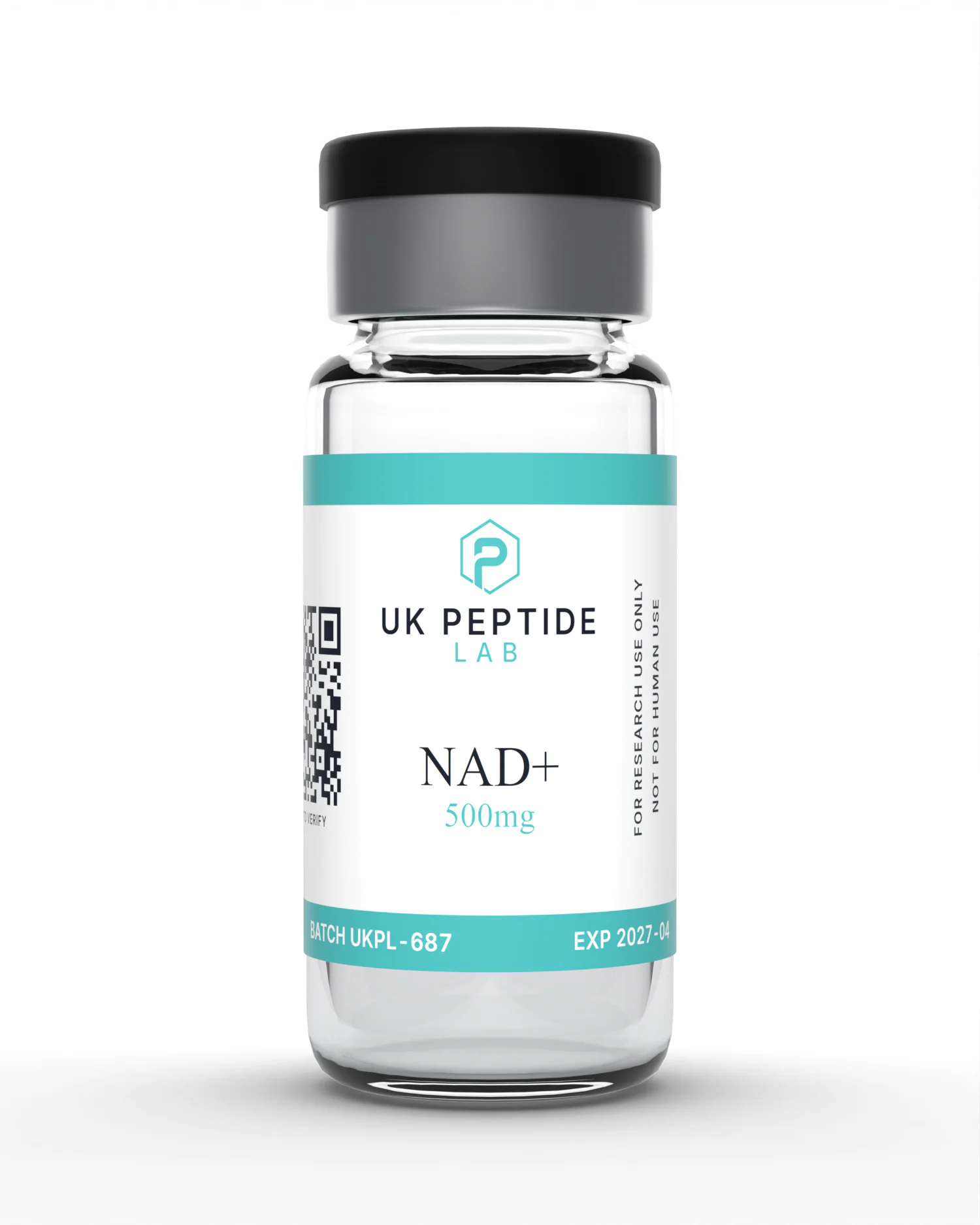
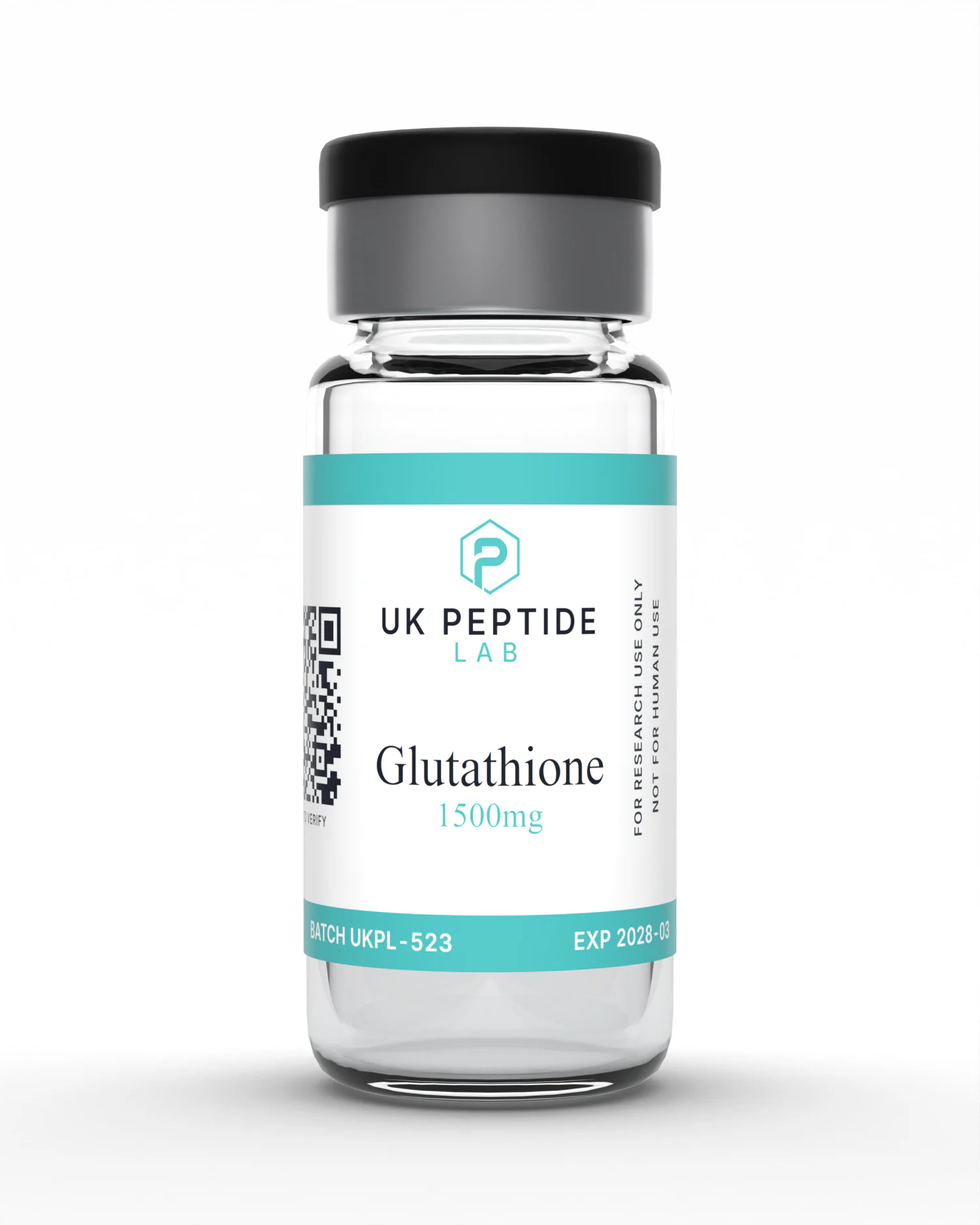
What's in this stack
Why this stack
NAD+ and glutathione are the two principal redox axes in mitochondrial research, and they are not substitutes for one another. Availability on one says nothing about capacity on the other, which is why they are paired here.
NAD+, oxidised nicotinamide adenine dinucleotide, sits on the electron-transfer and signalling side. It is the central redox cofactor of cellular respiration, cycling between oxidised and reduced forms as it carries electrons through glycolysis, the TCA cycle and oxidative phosphorylation. It is also consumed as a substrate rather than merely used as a cofactor by the sirtuin deacetylases and the PARP family, which is what links cellular NAD+ availability to DNA repair and to the ageing literature. Note that this is the cofactor itself and not a precursor: NMN and NR must first be converted through the salvage pathway, which introduces that conversion step as a variable in study design.
Glutathione sits on the oxidative-defence and detoxification side. It is a tripeptide, gamma-Glu-Cys-Gly, distinguished by an unusual gamma-linkage at the glutamate that makes it resistant to standard peptidases. Its cysteine residue carries the reactive thiol, and it is present intracellularly at millimolar concentrations, far above any other thiol antioxidant. It is the substrate for glutathione peroxidase and for the phase-II conjugation enzymes, and the ratio of its reduced form to its oxidised disulphide is one of the standard measures of cellular redox state.
Together they cover NAD+ availability and glutathione-mediated redox capacity, two of the most-studied axes in mitochondrial bioenergetics.
Both ship as stable lyophilised powders requiring bacteriostatic water reconstitution (sold separately). Research use only, see CoA for lot-specific purity data.
How to use
- Reconstitute each peptide using bacteriostatic water (sold separately) per the lot-specific CoA instructions.
- Store reconstituted peptides at 2-8°C, use within 30 days of mixing.
- Research use only. See CoA for purity data.
Stack FAQ
Why are NAD+ and Glutathione studied together?
They represent the two principal redox axes in mitochondrial research and they are not interchangeable. NAD+ is the central redox cofactor of cellular respiration and the substrate consumed by the sirtuin and PARP enzyme families, so it sits on the electron-transfer and signalling side. Glutathione is the cell's principal endogenous antioxidant and the substrate for glutathione peroxidase and the phase-II conjugation enzymes, so it sits on the detoxification and oxidative-defence side. Studying availability on one axis without the other leaves half the picture.
What is the difference between NAD+ and NMN or NR?
NMN and NR are precursors that cells convert into NAD+ through the salvage pathway; NAD+ is the cofactor itself. The distinction matters in study design, because a precursor introduces the conversion step as a variable while the cofactor does not. This vial contains oxidised nicotinamide adenine dinucleotide rather than a precursor.
Why is glutathione described as the principal antioxidant?
Glutathione is a tripeptide, gamma-Glu-Cys-Gly, present in cells at millimolar concentrations, far higher than any other thiol antioxidant. The cysteine residue carries the reactive thiol, and the ratio of reduced glutathione to its oxidised disulphide form is one of the standard measures of a cell's redox state. Its abundance and that measurable ratio are why it functions as a reference point in oxidative stress models.
Can I buy these peptides individually instead?
Yes. Every component in this stack is also sold as a standalone vial on our shop. The stack price reflects a discount applied when the components are purchased together.
Will the stack ship as one parcel?
Yes. All vials in a stack ship together in a single Royal Mail Tracked parcel from our UK facility. Same-day dispatch on orders placed before 2pm GMT.
Do I get a separate Certificate of Analysis for each peptide?
Yes. Each component vial includes its own batch-specific HPLC-UV/MS Certificate of Analysis. CoAs are also published on each individual product page.