
Buy Oxytocin UK
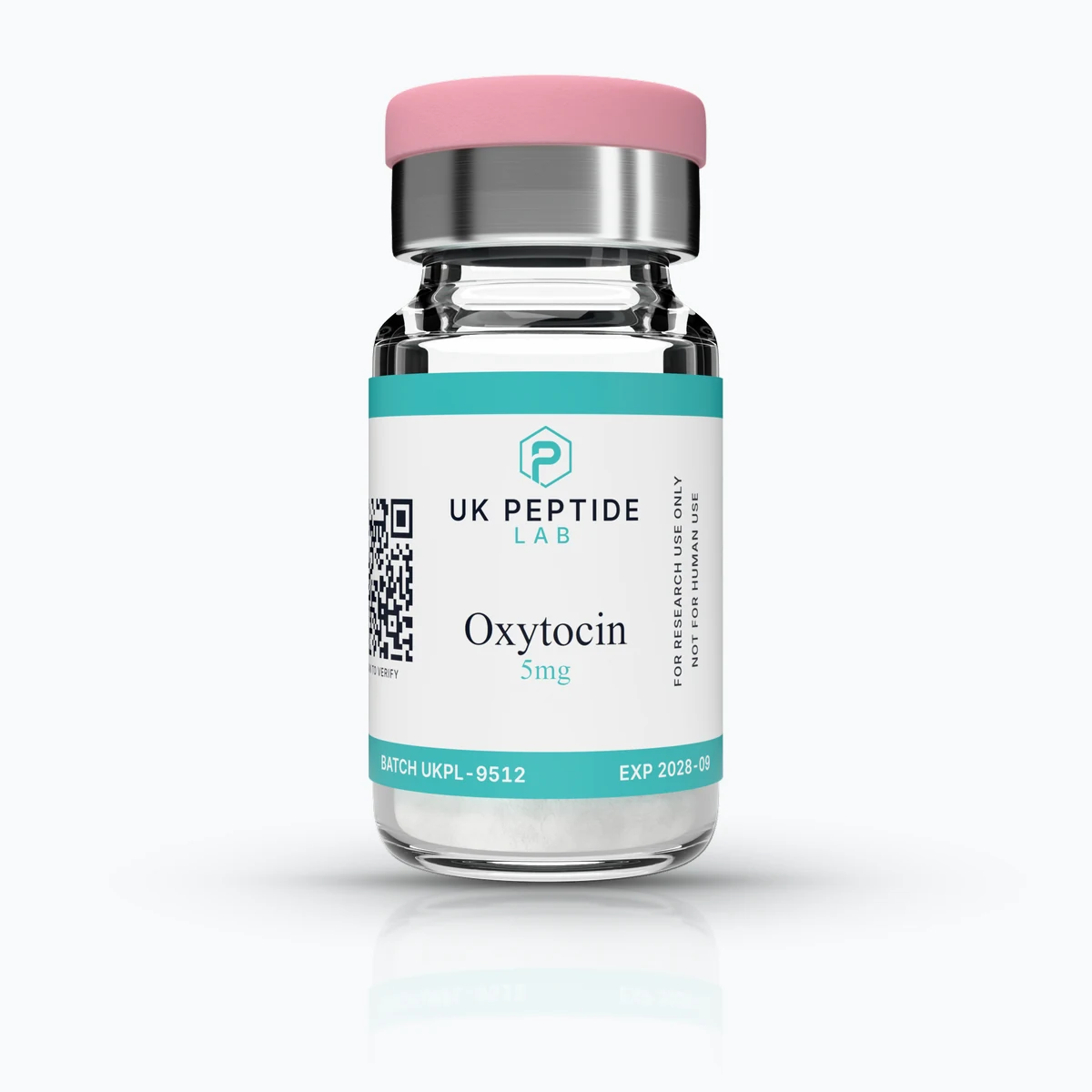
Oxytocin is a nine-residue neuropeptide hormone that is one of the most studied peptides in neuroscience. Our 5mg vial is a laboratory reagent with a named batch and certificate.
What is Oxytocin?
Oxytocin is Cys-Tyr-Ile-Gln-Asn-Cys-Pro-Leu-Gly-NH2, with a disulfide bridge between the two cysteines forming a small ring. It is made in the hypothalamus and acts through the oxytocin receptor, a G protein-coupled receptor, which is why it is a standard ligand in receptor pharmacology and signalling assays. Because the disulfide bond can scramble or dimerise during synthesis and storage, the analytical profile of an oxytocin batch deserves careful reading. Supplied for in-vitro laboratory research only, not for human or veterinary use, and it is not a medicine.
Published research on oxytocin receptor signalling is indexed on PubMed.
Intended Use: Strictly for in-vitro laboratory research. Not for use in humans or animals. This product has not been evaluated by the MHRA or FDA.
Why buy Oxytocin from UK Peptide Lab
Batch-specific test results
Check the reported method, result and testing source for each batch.
Published batch certificates
Review available lab reports and CoAs on the product page.
UK cold-chain storage
Stored at -20°C from arrival through dispatch.
Same-day UK dispatch
Royal Mail Tracked 24, free UK delivery over £69.
Available Oxytocin options
Frequently asked questions about buying Oxytocin in the UK
Is this the same as pharmaceutical oxytocin?
No. This is a research-grade reagent for in-vitro work. It is not a licensed medicine, and not for human or veterinary use.
Why does the disulfide bond matter for quality?
A scrambled or dimerised disulfide gives a different molecule with different binding. Reading the chromatogram and identity data on the certificate is the way to check.
What is the recorded purity?
Batch UKPL-9512 is recorded at 98.39%. The linked certificate holds the full result.
How similar is oxytocin to vasopressin?
Both are nine-residue peptides with a cysteine ring and differ at two positions. Receptor cross-reactivity between the two is a recognised research topic.